Thursday, 17 March 2011

Girl Power


This should be interesting. Chimamanda to moderate presidential debate. Let's hope she fires them well well. Read more here.

Wednesday, 16 March 2011

Green White Green


No matter the news I hear from Jos and of the political killings I read about as election day draws nearer, I'm optimistic for my country. It's part of our national constitution. Optimism flows in my blood. I've tried to be a cynic. Really I have but you can't fight blood. Naija dey bam bam.

Monday, 14 March 2011

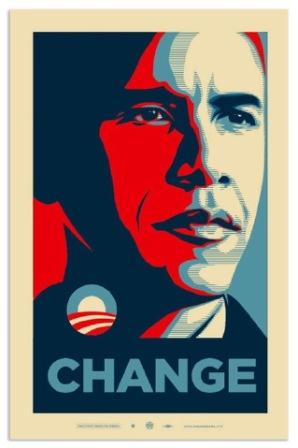
Change Gonna Come?


I just watched about 45 minutes of the Nigerian V.P debate (YouTube didn't have the rest) and my reactions are a little mixed. No doubt I enjoyed it. The candidates were well spoken, humorous at times and they offered their soundbites with a gravitas and sincerity that you don't encounter often in Nigerian politics. But at the end of the day, I couldn't escape that despire the packaging being more refined, I'd basically heard many of the statements before. Fighting corruption, we've been kung fuing the thing since 1999. Providing jobs, that one isn't exactly new either.

Also, there was a lot of PDP bashing and though some of it was very entertaining I felt that the candidates really lost an opportunity to expound on their policies by focusing so much on the ruling party. I wish somebody had said this is not about what the PDP hasn't done for you, this is what my party is going to do for you and this is how we are going to do it. One argument of course is that in such a debate, given that you have between 30 and 60 seconds to answer a question, there's not much time to expound on your policies but they didn't seem to have any problem summarising their vitriol against the PDP. At the end I knew what all three were against (PDP) but what exactly were they for? However, as I've said the PDP bashing was entertaining and here are some of the best instances of this.

"Great nations are not built on good luck." Pastor Tunde Bakare (CPC)

"Those who the gods want to kill they first make mad." Fola Adeola on the PDP. (ACN)

"I'm not concerned about the fanfare. It's a farewell party that PDP is having across the nation." Tunde Bakare on PDP's campaign.

"Flamboyant campaigns that look like beauty pageants." Chief Oyegun on PDP's campaign. (ANPP)

And my personal favourite just because its directness is almost sarcastic:
"The PDP are wicked. Get them out." Fola Adeola.


Unfortunately the PDP Vice Presidential candidate did not attend. And of course this was another opportunity for more bashing. Words like impunity, impudence and travesty were thrown around.

This is not to say that the candidates didn't have concrete policies.

"Amend the Constitution to remove immunity from prosecution from elected officers in criminal cases." Pastor Tunde Bakare on corruption. (CPC)

That however was the only concrete procedure I jotted down. I know there were more, Pastor Tunde Bakare talked about going back to a less oil based economy by developing agriculture, Chief Oyegun mentioned how religious violence had been practically combated in Kano State (the state where his principal was from) but all in all, I just got a sense of vagueness when it came to policies. When asked about corruption, the ACN candidate gave a proverb that says a fish spoils from the head so if he and his principal refuse to be rotten then their subordinates would follow their lead and so on and so forth. To me that just didn't seem concrete enough. The general vagueness of the debate was best exemplified in this statement about the Niger Delta made by Fola Adeola:

"Where there is no justice there is no peace."

It sounds good and it's certainly true but I would have preferred more concrete figures. What percentage of the budget are they going to devote to reversing the injustices done in the Niger Delta? How are they going to rehabilitate militants into society? What are the key issues they have identified in the area that if addressed will reduce tension drastically? Nothing on that from any of the candidates I'm afraid. Nothing.

I'll leave you with this and these were my final thoughts on the debate. Former military ruler and CPC presidential candidate Mohammed Buhari was purported to have said, Nigerians should go out and 'defend their votes.' Now what he meant by that was unclear, so the moderator (who was a good blend of forcefulness and charm) asked Pastor Bakare to clarify. He at first made matters murkier by alluding to the situations in North Africa without actually explaining if 'defend your vote' meant, defend your vote with violence. He then gave a closer to home example of this defence by narrating the story of what happened during a state election. Apparently, the people who manned the ballot boxes were surrounded by men with kegs of kerosene and matches in their hands so basically, there was no chance of a rigging.

This anecdote meant to inspire left me a little confused. Taking pictures of the voting process with your phone and not leaving the voting station until they have counted the votes all this is very well and good and I agree with this, but turning up with a keg of kerosene and box of matches at a polling station, surely this is just another example of the do or die politics that PDP is famous for.

Scenario 1:
There are men at the polling station with machetes, stopping me from casting my vote.

Scenario 2:
There are men at the polling station with kegs of kerosene protecting my vote.

Both situations look frighteningly similar to me. Both situations would make me consider staying at home on polling day and padlocking my gate. To be fair, the other two candidates were not as drastic in defining what they meant by defend your vote but I wish at least one would have stated clearly that their definition was exclusively non-violent. Arguably, Pastor Bakare's definition depends more on the threat of violence than actual violence but the election season is volatile enough.

And it's no good saying that the PDP have historically used violence in their election campaigns because you don't fight fire with fire as any fireman will tell you.


So in short, these are my thoughts on the VP debate. Watch it for yourself.


P.S
It was a shame that Vice President Sambo didn't show up because the three candidates might not have been so chummy otherwise. They were so united in their disgust for the PDP, they might have belonged to the same party, a point the moderator brought up.

P.P.S
The audience was too scanty.

Wednesday, 9 March 2011

Female Mechanics


On CNN a few days ago, there was a video about female mechanics in Nigeria. Glad that we had made the global news positively for once, I posted it on my facebook page and here are some of the responses.

1.This ain't rite(not being sexist) lool. Which guy wants a mechanic wife?????

2.Its better than having people out of job in a lawless society...where some women/men are struggling to feed their family. Who knows, maybe they can start their own businesses and employ some of the unemployed people. Just a thought.

3.Yes!!!!....women are becoming powerful!!!!......stop hating....

4.Times are hard sha. These babes will beat some guys oh!

5.I think a lady mechanic wife will come in handy.
a) She knows the value of money
b)She knows and feels the blood and sweat that goes into making money
c) She will be more kind on her husband
d) And she will be strong for all errm... purposes

I know why people would feel there was something subversive about women changing tyres. We've been told from birth that such things are 'a man's job.' But really, if we would only be rational. After all nobody came out of the womb knowing how to fix a carburettor. The things you learn are the things you can do. Professional ability has nothing to do with gender. Anyways, watch and see what you think.

Monday, 7 March 2011

Sexual Harrassment


It was very casual in my old school. We used to call it quaving. Boys would run up to girls and smack their bottoms or prod them in the chest or rub their legs if they were sitting close to them. The reaction depended on the girl. Sometimes girls would scream, the very sensitive ones might cry later on and the feisty ones would hit back, slapping, kicking, maybe scratching. The reaction also depended on the boy. If the boy doing the quaving wasn't good looking or was socially a runt, he would most certainly get smacked for trying to quave a girl. However, if the boy in question was handsome or cool, then sometimes the girl would laugh it off and conversation would carry on as if male hands had not just grabbed her chest. You could never tell though. Sometimes even the most popular boys got rebuffed and they would retreat puzzled, maybe even angry. How dare a girl deny them?

One reaction that never happened though was reporting. If certain female teachers saw a boy harassing a girl, they would usually come down heavily on the side of the girl. Slapping, hitting, shouting, "Leave her alone!" But these ones couldn't be everywhere and the boys grew wise. You wouldn't dare try to quave a girl if Mrs. G was around. Some male teachers however, were more likely to come down on the side of the boy. Not that they would join them in the quaving (though a few instances of this did happen) but girls who got disturbed by boys because they had bigger breasts or rounder bottoms, were often picked on by male teachers. "Leave boys alone," was a common mantra directed at these girls. Even the female teachers, would sometimes slip into blaming these girls for always being targeted. For example they would berate them over the tightness of their uniform as if skinny girls with flat bottoms ever got disturbed as much, even though their trousers were skin tight. In short, if ever a girl got quaved too often, or suffered excessive male harassment, it was her fault. The boy was to be blamed of course but the girl was also culpable for having such a big bottom and then choosing not to wear looser clothes.

I wonder why girls didn't report instances of quaving more. Maybe it was because the girls were ashamed but I think it was more because girls didn't think it was a big deal. Someone steals your stationery, you report that. Someone takes your Maths notebook and rips it up, that's a reportable offence but someone places their hand on your chest without your permission, well that's just one of those things. Just one of the occupational hazards of being female.

I'm reading a book by Kat Banyard called The Equality Illusion and it's only after I read her descriptions of incidences of sexual harassment that I realised that what we called quaving and tapping current in my secondary school were really just misnomers for sexual harassment, the harassment of girls because of their physical characteristics.

Quaving is a game, I once heard a boy say. It was a lie that we believed.

Friday, 4 March 2011

March is Here


Exams are coming.

Yepa!

Deadlines are closing.

Gbosa!

But the sun is shining,

And the sky is smiling.

The spandex joggers have come out again,

And tourist chatter fills the trains.

Young girls bare their thighs,

Some men try to cover their eyes,

Most stare like they are seeing suya.

March is here for better and worse.

Sunday, 27 February 2011

Be Encouraged


So Publishing Month is drawing to a close and if there's one note I want to end on, it's this: be encouraged. People will always give you stats. They will tell you that for every one person who gets an agent, there are x who don't. For every author who gets a publishing deal, there are x who don't. For every one person whose book sells, there are x number of authors whose books languish on the shelves and on an on it goes. After every hurdle you cross, there's always some statistic to tell you why you are unlikely to scale the next one.

It reminds me of a verse in the Bible that my Pastor in Nigeria was always using: Matthew 26:11a. He would read it out, "The poor are always with you," then he would add, "But they didn't mention your name." And we would chuckle but he was telling the truth. There will always be x number of people that didn't pass but who said your name had to be x? You have a goal, you have a destination, so keep your eyes on the prize and remove your mind from the things that tell you that you will fail.

As for me, The Spider King's Daughter was not my first attempt at a book. I had been x% many times. The x% of people that started books and didn't finish. The x% of people that sent to an agent and got rejected. The x% of people that could never get past chapter 1, chapter 2, chapter 3, chapter 15 but I knew God told me that I was going to be a writer. Even with that, I nearly gave up. It's easy. All you have to do is look at the stats and remember the failures and the past drafts and the euphoria that followed the last book that you really thought was going to be the one. But be encouraged. It doesn't have to be a book. It could be a job, a marriage, an exam. Whatever it is, be encouraged. He is able.

Tuesday, 22 February 2011

Nothing to Blog About Except...


We interrupt these Publishing Month proceedings with a word from the blog owner.

I am hereby tired of Publishing Month. I've blogged about getting an agent. I've blogged about the editing process and I think these two topics are the only things I really know anything about. If you have an agent, the nuts and bolts of getting a publisher are quite mysterious to you. All I know is that one day my agent told me my book was on submission (i.e she had sent it to editors at many publishing houses) and the next, a publisher was interested. Till today, I still don't know how many editors she sent my manuscript to; I don't know how many rejections I got; I don't even know what synopsis she put of the book.

However, I do know that during the submission process she asked for a nice photograph of me, which I found very amusing. Why would you need to see a photograph to know if you liked my writing? It seems that the magazine culture has invaded even the world of books. I asked my editor recently if she were the one that asked for the photo and she denied vehemently, which means someone out there saw my face and declined THE SPIDER KING'S DAUGHTER. And I thought I was a fine girl.

It was a good thing that my agent kept me in the dark for most of the process I think. When my current editor at Faber asked for a meeting, my agent didn't even want to tell me where we were going. Our conversation a few days to the meeting went something like this.

'So where is the place?'
"I don't want you to get your hopes up.''
''R we are going there on Monday. It's Friday, I need to know where the place is.'
'Faber.'
'Ooooh.'
'I know but don't get excited.'

It was very sensible of her to control my excitement levels. A meeting with a publisher doesn't necessarily mean that they are going to offer you a deal. It's the same way a date with a girl doesn't mean she's going to marry you. If you set your expectations to high, a disappointment can crush you.

R also didn't tell me about the editors who rejected my work. Once, after we'd signed the contract with Faber she mentioned one of these editors but when I pressed she wouldn't tell me more, not even what house they worked for. And this was also good. It's very hard to take rejection for a manuscript you've put so much work an effort to. I've read some writer blogs that say that their agents tell them every single house they submit to, every rejection they get and worst, the feedback from all these rejections. I'm glad I didn't have to go through that. God is good.

My meeting with my editor was shockingly normal. Faber is quite a cosy publishing house and I like that. Their building was empty when I went because it was December and most people had already gone for their Christmas holidays (work in publishing. They get the longest vacations). Me, my editor and my agent sat around a desk and we gisted for about an hour. We barely talked about the book. We just gisted about my childhood, about my editor's childhood, about my agent's childhood, about the publishing industry, about who had a nice cover and who didn't, who'd one the prizes that year, who didn't, who should have. Then about twenty minutes to the end, we talked about the book and the changes my editor would suggest and we were, excuse the pun, on the same page. So I was happy when Faber made an offer but thanks to my agent, if they hadn't made an offer, I would not have been shattered.

So it turns out that I did have something to blog about after all.

P.S
Kudos to Teju Cole who is making tsunamis in the literary world with his debut novel, OPEN CITY. Read his New Yorker review here.

Monday, 21 February 2011

Binyavanga Wainaina


Some stirring prose from the Caine Prize Winner. Read here. And read his article on how to write about Africa here for some tips.

Tuesday, 15 February 2011

Things I Have Learnt From


Editing.

I've been editing my book for about a year and a half now: six months with my agent and one year with my editor so even though I am not a veteran of writing, I am a veteran of editing as most writers will tell you, in particular the best ones, that they do very little work with an editor. There are even some writers who only do one draft. I can only live in hope for the next book. Anyways, all this editing has taught me some things that I would like to share.

1. Backspace is your friend.
In total, I have cut more words from my book than I have in my book. I know this because I made a separate file called 'cut outs from novel' in which I saved everything that I deleted and a few months ago, I discovered my rejected paragraphs and sentences were about thirty pages longer than my book. Four things to look at for when you are using the backspace key.

a) Overwriting.
I fell particularly foul of this. Every single fancy metaphor, allusion, simile and alliteration had to be used in every single sentence. In one sentence, I could allude to popular culture by referencing Naeto C, religious culture by referencing the Bible and if I thought of five good ways of describing something, instead of narrowing them down to three, I'd just use all of them, stringing endless clauses along. This worked once in a while but after I'd done it ten times on a single page, it became tiresome, it became clear that I was overwriting. This is what one risks when one tries to stuff all their fancy literary footwork into each page. Sometimes, the simple sentence with one object, one verb and one subject can be used to much greater effect than the long winded one. So go through and look for the Alasheju sentences in your work and either simplify them or cut them out.

b)Adverbs
Don't belabour the adverbs. This point can't be belaboured enough. Try looking for words that encompass both the verb and the adverb you want to use. For example, he walked slowly can become he ambled. Another way of getting rid of the adverbs of course is just to cut them out because sometimes, substituting them with an encompassing verb can lead you into the trap of overwriting. For example, he walked slowly may become, he perambulated. Perambulated is a verb that should never be used seriously.

c) Keep the dialogue clean
I have the tendency to break dialogue up with meaningless phrases like, he looked up, or he scratched his head, or she rolled her eyes and pursed her lips. My editor keeps reminding me to let the dialogue speak for itself, no pun intended. If a character is irritated, you should try to convey this in what she says as opposed to adding, she rolled her eyes in irritation. Keep it clean.

d). Keep everything you cut.
You never know when it might come in useful.

2.Character Motivation

It's very important for your reader to know why a character is doing something. What I found, while writing THE SPIDER KING'S DAUGHTER, was that in trying to make my plot move in a certain direction, I would make my characters do things that were at best unexpected and at worst completely out of character. Why did peace loving Y, suddenly decide to kill X with a machete? Yes I know X has to die for your plot to move forward but why would Y the vegan kill X? As a writer, you can make your characters do things but if you want your characters to become more than stick figures, their motivation for doing things needs to be better than, I needed to move my plot from A to B.

3. Plot holes
These can be simple mistakes like a character wearing a white suit at the beginning of the scene and then wearing a black one by the end. It can be bigger ones like changing a minor character's name halfway through the book. It can be huge ones like forgetting a character has been killed off. Big or small, these inconsistencies jolt the reader out of the plot and remind her that this is only fiction, something you don't want to do until the reader reaches The End.

These are three of the most important things I have learnt during my editing experience. I hope this list helps.

Tuesday, 8 February 2011

Commonwealth Short Story Competition


Commonwealth short story competition for anyone who is from the commonwealth and over 19. Entry is free, submissions can be made online, the first prize is 2000 pounds and the deadline is March 1 2011. If you have a story, start brushing it up and if you haven't written one yet, you still have time. Read more here and the full submission guide lines here.

Monday, 7 February 2011

Helon Habila


I discovered Helon Habila when I read Measuring Time, but it was his first novel, Waiting for an Angel, that really resonated with me. I would recommend both books. The first because it expanded my anaemic knowledge of Northern Nigeria and the second because I was alive in the Nigeria he describes yet I never knew how bad military rule was. Anyway, here are some tips from the Caine Prize winner himself. Read here.

Friday, 4 February 2011

Finding an Agent


I knew very little about the publishing industry when I sent off my first manuscript six years ago. Slush pile, editor, MS, partial, copy editor, all these were words that either meant nothing to me or had a hazy, rough meaning. For example I assumed that the editor did all the editing while I supervised. She would somehow be able to transform her writing voices and style and cadence into that of my characters and rework my novel for me. My writing would flow seamlessly into agent/editor writing and then back again without even the most astute reader spotting the difference. As one of my teachers used to say, when I assume, I make an ass out of you and me. (ASS-U-ME) Editing is many complex things but as I have discovered, it does not include your editor writing your book for you.

The very first step of course in the whole journey is writing the book. Which I know is easier said than done but it has to be done for us to advance in this how-to-column. However you do it, whether you need to lose sleep, or shed tears, or deactivate facebook, write the book.

Now it is done and dusted (or so you think) the next step is to find an agent. Maybe not all the people you see on the shelves of Waterstones have agents but the norm is that they do and the reason is this: most editors in publishing houses will not read manuscripts that do not come from agents. It's a win for all parties involved. The editor in the large publishing house will have her reading load greatly reduced by the human sieve that is an agent. The writer will gain instant access to all the contacts in the publishing world that the agent has spent years building and lastly of course, the agent gets 15% of all revenue the writer makes from the book. So again, winners all around.

You can find agents online. The pros of looking online that its free, it's free and of course, it's free. The major con I would site however, is the information over load that comes with Google. As far as I know, there is no comprehensive list of agents online so you would have to do a lot of trawling. I found my agent in a book called THE WRITERS AND ARTIST'S YEARBOOK, a book which I cannot recommend enough. It has a list of all the reputable agencies in both England and America. It also has advice on how to write a cover letter, how to edit, how to pay tax as a writer, what a publishing house is, what it does and this information is all given by established writers, so it's palatable and easy to digest. At about 13 pounds, this book is a serious investment that I am grateful my sister made for me, when 13 pounds was too much to spend on a book.

Why do you need an agent? As I've mentioned they have the contacts in the publishing industry so an editor is more likely to read a manuscript that has their stamp of approval. However, it's not just the contacts. They help you polish your manuscript until its in a state to be read by an editor. I spent about six months editing THE SPIDER KING'S DAUGHTER with my agency before it was submitted to editors at publishing houses. If it was sent to publishers, as it was, in its raw state (which I thought was a final draft), it would probably have been resoundingly rejected. Also, they will make sure you get the best deal you possibly can out of your publishing house and last and most importantly, they will always fight your corner. Your agent has your back.

So now we have discussed what an agent does for you and why you should try and get one, let's discuss the how. You don't need any connections to get an agent, a misconception I once had. If Chinua Achebe were to recommend you to his agent, I'm sure that would increase your chances of success but what would equally increase your chances of success would be trying to write the most polished draft that you can. Long leg helps in every profession but less so in writing than in others I can think of. If the writing is good, the writing is good, recommendation or not.

I'm only going to discuss briefly the submission process because most agents will have this information on their websites. For example, my agency has submission guidelines here,. However, I will go through some important things about the submission process that are mentioned in the guide lines.

1. The Cover Letter

This is where you sell yourself like a piece of meat. It's a bit like a C.V but it should read better than a list of bullet points. My cover letter wasn't particularly fantastic but I have read some good ones since then and the less listy they are, the better. In fact, it's more like a personal statement than a C.V because in the former, you only pick the achievements that are relevant. Whereas in the latter, your fluency in Creole is listed anyway even though you're applying to be a deep sea diver who will have no contact with any other life form but fish.

2. The Synopsis
Think long and hard about plot and themes. Think about which characters you want to name in your synopsis and which characters would make the summary become too convoluted. I know it's difficult to boil down 300 pages or 400 pages into three short paragraphs when you wrote those pages and know every detail and plot twist. I still struggle with this but you're going to have to do it at least once successfully, so it might as well be in the letter you send out to agents.

3. The First Three Chapters
Many UK agencies ask for what is called a 'partial' and so you're not going to get more than three chapters to convince them that they want to read more of your book. Make these three chapters count. Go over the paragraphs. Go over the sentences. Go over the words. Go over every single full stop because there's no point writing a witty cover letter and an intriguing synopsis if you're going to fall at this last most important hurdle.

This is a mammoth of a post but I hope it helps. Keep the questions coming guys.

P.S
A good agent will never ever charge so if they ever ask for cash to read: RUN. 419 has reached the publishing world.

Wednesday, 2 February 2011

The Bridport Prize


Poetry and short story competition with a grand prize of 5,000 pounds in each category. Open to non-UK applicants as well so get cracking guys. The details are here.
Related Posts Plugin for WordPress, Blogger...